The Blog of Cafe Dissensus Magazine – we DISSENT

Posts by Cafe Dissensus Everyday

Rural India: Tales of children of the desert…

By Akshatha Shetty & Piyush Goswami
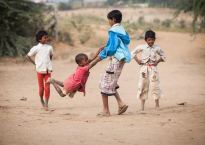
While some of the children travel with the villagers all round the year hopping from one fair to another, the others live in the neighboring slum areas. These kids cannot afford to go to school but they are quite happy doing what they do. When they are not hassling tourists, the kids are often seen collecting camel or cow dung, which is dried and later sold to herders and villagers as fuel.

On Being a Gay Activist in India

By Ashley Tellis
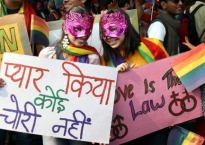
Being a gay activist in India over the last two decades – from the repressed and political runt of a lad in Bombay you were then to the thick-skinned whore you are today in Delhi – has been one hell of a ride. It has been most of all, salutary and educative. It has taught you that the business of being a minority means negotiating the sharp and abrasive asymmetries of the various struggles you are simultaneously part of because constituents of all those struggles form who you are.

Post-Apartheid and Post-Mandela

By Nick Matlin
It is almost cliché to emphasize the fact that while racial frontiers have begun to break down, the frontiers of class remain stubbornly entrenched. Much of the country’s wealth still rests in the hands of the white minority.

Rural India: The day we met Krishna…

By Akshatha Shetty
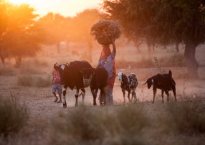
Despite the early onset of winter, the scorching heat of Rajasthan enslaves every soul. Dust rose and settled like smoke from a dragon’s flared nostrils. Far ahead, we heard the familiar chattering of three Rajasthani women clad in vibrant colors. Their hips swayed to the tunes of the earth, while their shoulders bore the burden of poverty.

Traun Tejpal: The Fall of the Mighty-Identifiable?

By Mosarrap H. Khan
But why is the ‘speaking up’ so selective? Even if one leaves aside cases of rapes in the rural areas and those perpetrated by the Indian Army, what about the gruesome rape cases and killings during the Muzaffarnagar Riots in early-2013? Almost three months have passed since the Muzaffarnagar Riots, has the social media ‘spoken up’ for the rape victims?

Documentary: Muzaffarnagar Bleeds: A Reenactment of Gujarat Riots, 2002

By Mosarrap H. Khan
Both the ANHAD and the Citizens’ Report detail the gruesome killings, looting, and assault on women during the riots. Vaseela from village Laakh narrates that her daughter was brutally gang raped and then burnt alive. On the 8th of September, when the family was fleeing their village, her daughter, who was keeping unwell, was caught by four men and gang raped. She was then burnt alive.

From Jogeshwari to Azad Maidan: A detour through Govandi

By Rama Akhtar
I live in a Muslim ghetto in Jogeshwari (East). I am aware that this sounds jarring and may reek of stereotyping right from the first sentence since ‘Muslims’ and ‘ghettoes’ have been co-related more often than not. My house is inside a narrow by-lane seconds from the main road and across this road lies a Hindu ghetto.

Photography: Lunatic Clicks

By Vishal Thomas
After finishing my school, I took a year off and assisted Mr. Anil Kumar. I learned photography from him more thoroughly and, also, understood the commercial world of photography. I was very lucky to be able to learn photography from such a great photographer. He introduced me to lighting.

Life was Beautiful…: A Dalit Student Ends his Life

By Chapparban Sajaudeen Nijamodeen
The student community requested the Vice-Chancellor, Prof. Ramakrishna Ramaswamy, to show the concrete steps that have been taken to resolve Dalit students’ problems regarding discriminations, suicides, and mental harassments. This action was demanded in light of the Pulyala Raju Committee Report. A Dalit student, Mr. Pulyala Raju, was enrolled in the integrated Linguistics course. He committed suicide in 2012.

Book Review: Jhumpa Lahiri’s The Lowland

By Bina Shrestha
Jhumpa Lahiri does it again what she does best: vivid description of emotions, relationships, lifestyle in the simplest of language. She brilliantly describes the daily lives of a Bengali family, from the nitty-gritties like eating fish-stew made in mustard and chilly-paste ground on a stone slab, to the purposelessness of the Naxalite movement that claimed many innocent lives.