The Blog of Cafe Dissensus Magazine – we DISSENT

Posts by Cafe Dissensus Everyday

Photo Essay: Geneva Camp, Dhaka

By Mosarrap H. Khan
There are around 5000 families living in the camp and there are only about 200 toilets. There are no schools and healthcare facilities in the camp. There is a high drop-out rate among school-going children. Most of the inhabitants of the camp work as mechanics, drivers, cooks, and domestic help.

‘Are you a Bangladeshi?’

By Mosarrap H. Khan
To my horror, I found that my passport application was withheld because the space for citizenship verification had been left blank in my police verification report. The report neither confirmed nor denied my status as an Indian citizen.

No ‘Kashmir’ in India: A Film Festival Vandalized in Hyderabad

By Abu Saleh
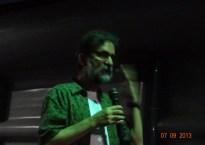
The opening day of the festival was at the L V Prasad Preview Theatre. Before the inaugural session, around forty people gathered one by one and started shouting. At first they broke the entrance door panels, windowpanes, one TV screen and began to throw flower vases. They went inside the projector room, damaged some of the old film reels of the institute/distributor (LVP).

No Muslims, please!

By Nazmul Hussain
The statement shook me and forced me to think that the discrimination is not only based on religious background but also on culture and language, too. I felt a tremor but, taking control of myself, asked the couple gently: ‘Do you think I am not Bengali?

Education: Educational Access and Educational Quality Debate

By Mary Ann Chacko
To demonstrate how this distinction between educational access and educational quality is popularly understood, I would like to discuss two short clips from a Malayalam movie titled ‘Vadhyar’ [School Teacher, 2012], which portrays the struggle of a government school to survive amidst a corrupt bureaucracy, high-fee-seeking English medium private schools, and government-aided schools run by religious organizations.

Film: Rendezvous with Shyam Benegal

By Nadira Khan
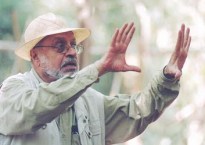
He seemed very eager to narrate the history of the Hindi film industry and how Urdu language and Hindustani culture played a crucial role in the early period of its development. He said that Hindi, as is often thought, is a not a recent language. Rather, it existed before in a different form.

Book Excerpt: Blood, Sweat, and Gorkhaland: Part-II

By B. Khaling
As the mighty column of demonstrators, snowballing as it forged ahead along the R.C. Mintri road (they were coming on) connects the Rishi Road to form a three-way junction. The CRP jawans who had been holding back the marchers from Algarah-Pedong-Labha (mentioned earlier), were taken aback by this sudden turn of event. However, discretion prevailed as they were hopelessly outnumbered by a column of more volatile marchers.

Book Excerpt: Blood, Sweat, and Gorkhaland: Part-I

By B. Khaling
There was no stopping the people once they decided to go ahead with the programme, scheduled to be held on the Mela Ground. Slowly but surely, the town began to be thronged, at first by curious crowds of onlookers, who came in small groups to loiter around the town aimlessly, but with keen eyes to watch the mood and attitude of the patrolling CRP jawans.

Media and Moral Policing: The TV9 Report on UoH Students

By Abu Saleh
After watching the report, the UoH campus community took it seriously. Students responded in social media about the misrepresentation of campus life. False allegations like portraying students as drug and sex addicts were seen as moral policing. Further, it led to a larger debate when the report suggested that the non-locals were damaging ‘culture’ here.

Why Are the Gorkhas Discontented?

By Rajendra Prasad Dhakal
But directing the might of the state against a democratic mass movement for constitutional rights is autocratic, majority-centric, and parochial. In political science, an apt and universally acknowledged saying goes: ‘Will, not the force, is the basis of State.’

Book Review: Basharat Peer’s Curfewed Night

By Shaik Zakeer Hussain
Basharat Peer’s Curfewed Night (2010) is an intensely passionate memoir about the struggle for freedom and justice inpeer what one former U.S president described as the ‘world’s most dangerous place.’ The story of Kashmir is set against the backdrop of Peer’s life and his life is interwoven with the melancholy of his homeland and its inhabitants.