Rabindranath Tagore’s ‘The Broken Home’ (Nastanirh): Chapter 2
By Lopa Banerjee
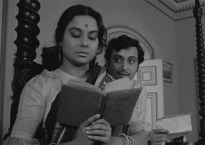
In the evening, when Charu became infuriated to the point of complete silence, Amal discreetly dropped from his pocket a hand-written note.
By Lopa Banerjee
In the evening, when Charu became infuriated to the point of complete silence, Amal discreetly dropped from his pocket a hand-written note.
By Lopa Banerjee
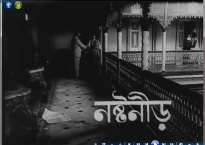
Bhupati was young, passionate about his editorial work, current affairs and world politics to the point of addiction, and there was no dearth of people to arouse his passion for dissenting on an everyday basis.

By Bhupinder Singh
While I was still under the spell of the writers of the Boom era, a new generation of Latin American writers were ready with more contemporary and evocative works. Beginning in the 1970s, many novels confirm the view that post-Boom Latin American literature has moved beyond ‘magical realism’ and is being enriched by a galaxy of writers with very distinctive styles.
By Bhupinder Singh
Latin American literature is like the Amazon River, massive in its expanse and meandering across many thematic streams. The most well-known of these is its association with magical realism and what has come to be called the “dictatorship novels.”

By Malsawmi Jacob
Sanga stayed on in bed, closed his eyes and tried to sleep again. But his heart was burning. Dinpuii had appeared in his dream, smiled at him and walked away. He ran after her but he couldn’t catch up, she was too fast. That was why he had cried out.

By Lopa Banerjee
Through these scenes and smells, I want the readers to crave for that bigger picture of harmony, love, and peace which has been sadly endangered, which the people of Kashmir yearn for, every moment.

By Malsawmi Jacob
In these four stories particularly, we see the image of water as a means of life and death, physical and (according to some beliefs) spiritual cleansing, and of unification of ideas and identities.

By Lopa Banerjee
During a trip back home, a visit to an old pond/creek in the old neighborhood where I had stayed as a child triggered memories in an unexpected way. The pond brought back memories of one of the first, formative experiences of rain in my childhood. While roaming by the pond on a rainy day, some snippets of my grandfather’s death came to me in a flash, and I remembered the downpour that had occurred then, the rainy holiday I was enjoying in my mother’s maternal home, and how that day brought about my first brush with death.

By Safia Begum
If I wanted to write at night, I would go to the toilet, stand there, write, and come back. In the toilet, we had a small box for sanitary napkins; I used to hide my pen and papers there. And, again, in the morning I would take it out from there and send my poems to the magazines.

By Lopa Banerjee
All these years I have worked to make Omaha my home with its long, tiring winter days of endless snowfall and mist, its sunlit days of solitude, its dark clouded summer evenings breaking out into violent storms and tornadoes. It is nowhere near the grandeur of experience of friends, who have been lured by the luxury and ambiance of big American cities and the dreams fostered there.

By Lopa Banerjee
The summer I turned ten, I knew my mother, too, craved to sing these songs and wanted to teach me, so I could sing in the choir. Her voice ached to traverse the vast terrain of sounds between the high and low notes of the harmonium. I could not see then the atoms of the dozens of glittering particles inside her neck that toiled to spell the musical notes.
By Mosarrap H. Khan
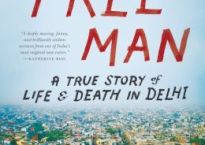
Aman Sethi’s A Free Man:A True Story of Life and Death in Delhi, focused on the life of Mohammed Ashraf, is by no means a sociological work. It is a journalistic work that explores the life of one of those thousands of nameless workers who, while contributing significantly to India’s growth story, are often rendered faceless and seen as having no individual subjectivity.
 Cafe Dissensus Everyday