The Blog of Cafe Dissensus Magazine – we DISSENT

Posts from the ‘India’ category

Genesis of National Foundation for Entrepreneurship Development (NFED): A Socialist Perspective

By R. Ganesan
The Founder-Chairman of the National Foundation for Entrepreneurship Development (NFED), India, was guided by ideals of socialism during its initiation and formation. It is headquartered in the Coimbatore District of Tamil Nadu State, India. Since 2003, NFED has been functioning as a virtual organization. During this period, its activities focused on research, training, awareness, extension, etc. It is in 2013, we decided to spearhead all its activities in real-time and congregated a group of wise academicians and professionals to institute NFED as a trust.

Digantar: A Glimpse at an Alternative Approach to Education

By Riti Das Dhankar
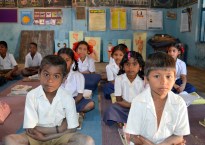
Every step that leads towards an unconventional path is met with impediments and speculations. It is easy to gain support for an established idea but not for an alternative one. A school that debunks the idea of classrooms and has groups where every child is at a different level is not something that would go down well with parents, whose idea of a school is one where the teacher writes on the blackboard and every child in the classroom is at the same level.

‘Hindu’ Terrorism?

By Mosarrap H. Khan
Then Mohanji and Indresh, both said: Yeh bahut achcha hain. Zaroori hain. Sangh se nahi jodna. Sangh nahin karenge. [unclear] Hindutva ke liye bhi aisa koi hain. Sangh ka yeh vichar nahi hain. (This is great. It’s very important that it be done. But don’t link it to the Sangh. The Sangh will not do this. [unclear]. Now Hindutva has someone like this on its side. But this is not the ideology of the Sangh.)

Do We Take Teacher Education for Granted in India?

By Mary Ann Chacko
That was years ago. Today my heart is filled with gratitude and the precious memories of teaching in a residential school for boys in Yercaud, Tamil Nadu. But, looking back, I realize that my meltdown was only partially triggered by the thought of dreams remaining unfulfilled. I was raging because I recognized the low-status of school teachers and teacher education colleges in India. Hence I did not want to be associated with the profession or with the degree.

Social Entrepreneurship in the Education Sector

By R. Ganesan
It is to be noted that these social entrepreneurs invest money and use the social entrepreneurial tag for enjoying privileges (social status, tax exemption, and redemption). Most often, these investments are purely motivated by profit-making and driven by greed. These institutions seek donations and frequently hike the fee structure and other incidental charges (boarding and lodging).

An Interview with Dr. Neha Vora on ‘Impossible Citizens: Dubai’s Indian Diaspora’ (2013)

By E P Mohammed Swalih
This is what I mean by “consumer citizenship” – you mark your identity and belonging through material goods. This is of course connected to prosperity but it is not reducible to wealth. I remember one of my first interviewees in Dubai telling me that when he was growing up in Kerala, Carrefour plastic bags were considered status symbols.

Book Review: Aman Sethi’s A Free Man: A True Story of Life and Death in Delhi

By Mosarrap H. Khan
Aman Sethi’s A Free Man:A True Story of Life and Death in Delhi, focused on the life of Mohammed Ashraf, is by no means a sociological work. It is a journalistic work that explores the life of one of those thousands of nameless workers who, while contributing significantly to India’s growth story, are often rendered faceless and seen as having no individual subjectivity.

Communalism and the Role of the State: An Independent Inquiry into Muzaffarnagar Riots

By An Independent Inquiry into Muzaffarnagar Riots
Fighting communalism is not merely an electoral issue. The communal forces can be defeated only by ground struggles built by an alliance of the minorities, the working masses, the dalits, the tribals, other oppressed castes and progressive sections of the intelligentsia. In this regard the example held out by the people of Hussainpur, Kheda Gani, Garhi Novabad, Garhi Jaitpur, Kurawa and other such villages is a ray of hope.

Nafisa and Hyderabad: The Social Activist and the City

By Mosarrap H. Khan
Nizam’s Hyderabad metamorphosed into a shiny, new city with wide roads, modern steel-and-glass structures, swanky cars, and multinational eateries. Ten days into my stay, I was on my way to the Old City, originally founded by the Nizams. Once on the periphery of the Nizam’s city, the landscape was perceptible different.

Interrogating the ‘Natural’: Against the Supreme Court’s verdict on Section 377 – Part I

By Shreya Ila Anasuya
From singing Lady Gaga to a rousing Hindi protest song asking who it is – exactly – that can possibly be threatened by people asking for freedom. From warning the participants not to betray their queer communities by voting for a party that has expressly supported the Supreme Court verdict, to dancing to the wonderfully apt ‘Pyar kiya toh darna kya?’

Kaushal v. Naz Foundation: The real ‘revolting subject’

By Nienke Boer
We should take courage from the public outcry that has followed this decision. Homosexuality in India is now, more than ever, a subject of public discussion, an issue for debate. The shame the Victorian legislators tried to brand onto this form of desire is being eradicated, and it is no longer a whispered taboo.