The Blog of Cafe Dissensus Magazine – we DISSENT

Posts from the ‘Literature’ category

Chapter 3: Game Plan

By Nilanjana Dey
Diana and Apollo were waiting eagerly at ‘The Den’ for the brief. Apollo noticed Loki’s strand-connection. The strands did look like limbs of white ants. Diana kept tapping her feet on the ground and spared occasional glances at the door expecting Loki.

Chapter 2: Loki’s Den

By Nilanjana Dey
Diana and Apollo looked around the dusky lanes as they tried to figure their way in. The entry had four doors and all looked the same. They were wondering which route to take.

Chapter 1: The Outcasts

By Nilanjana Dey
The city of white ants, Sopora, just woke up to a new technology. The new communication team – ringers – was all over the city, trying to attach strands and fit receivers that would connect each and every part of the city. And also other white-ant colonies. This way they would be able to network with one another much better.

Persephone

By Rita Bhattacharjee
It was the night when men turned into beasts – lurking at street corners, hiding in plain sight.
Gargoyles clawed out my guts with steel-tipped talons, feasting on flesh,
each of my wounds, a vagina oozing blood.

The Ripples of Life

By Lopa Banerjee
Her thoughts glided between her life, then and now. Life had threatened her with its clarion call, which she tried her best to dismiss with her arrogance, her vitality, her quest to live. Her mother’s death had pushed her, vehemently and mercilessly, to a bottomless pit from which she pulled herself out slowly.

Mehru’s Dream

By Mosarrap H. Khan
A strong gust of wind almost threw her off. She felt the first few drops of cold rain on her skin. It excited her and made her want more. Mehru stood in the middle of the courtyard with her face lifted to the sky in anticipation. The large drops of rain lashed against her face, making her feel a stinging pain.

Analyzing the Feminine Identity in Jane Austen’s Society

By Lopa Banerjee
Constructing a vivid picture of the ‘women’s culture’ that Austen herself was surrounded by, Kaplan directs us towards a central question: “What made it possible for Jane Austen to write?” Seeking an answer to this question, she illustrates the contemporary female friendships that represented the socio-cultural context of Austen’s novels.

The Gift

By Anna P. Monaghan
Pickard glowed in private memory of his kindnesses, but he desired greatly for a new language of love. This was not just kindness, he thought – this was a man’s right to feel! To feel and express his feeling! Would his snobbish relatives ever understand? How would they react if they knew François was in his will? A man has the right to pass on his legacy – it is his right! And François was safe.

Family Matters: Telling True Stories

By Lopa Banerjee
During a trip back home, a visit to an old pond/creek in the old neighborhood where I had stayed as a child triggered memories in an unexpected way. The pond brought back memories of one of the first, formative experiences of rain in my childhood. While roaming by the pond on a rainy day, some snippets of my grandfather’s death came to me in a flash, and I remembered the downpour that had occurred then, the rainy holiday I was enjoying in my mother’s maternal home, and how that day brought about my first brush with death.

We write, therefore we think…and imagine: The School for Children Writers

By Ursula Estrada
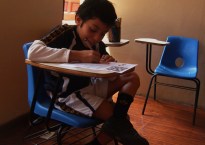
The games that enable children to learn new writing tools are sometimes carried out with the help of props. Puppet theaters have been used to collectively create a play through a performance. At other times, a little plastic mouse has triggered a game in which children create their own version of Mouse City: they first draw a map of it and write a set of directions to find a hidden treasure, which other students will later follow, moving the mouse through the map.

In Conversation with the Tamil Author, Salma

By Safia Begum
If I wanted to write at night, I would go to the toilet, stand there, write, and come back. In the toilet, we had a small box for sanitary napkins; I used to hide my pen and papers there. And, again, in the morning I would take it out from there and send my poems to the magazines.