Two Poems
By Nishi Pulugurtha
He drank and drank till it drove him to an end
Two months ago, it all ended, or did it?
Today, Moyna has got some work
More children all around – the boy there too.
By Nishi Pulugurtha
He drank and drank till it drove him to an end
Two months ago, it all ended, or did it?
Today, Moyna has got some work
More children all around – the boy there too.
By Mohan Ramanan
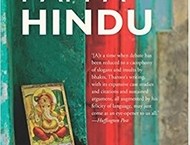
Tharoor’s Hinduism is both a result of a particular practice and an understanding of its tenets mainly from English translations. Many of us English educated people (I count myself among them) like Tharoor also got to know our Hinduism from a reading of translations of the Vedas, Upanishads and The Gita, and the writings of Sri Aurobindo, Swami Vivekananada, and Radhakrishnan.
By Rimli Bhattacharya
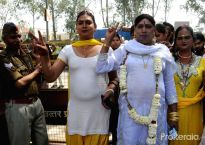
Born in 1959, Rani lived with other eunuchs in a bungalow in Dasna, Uttar Pradesh. With no formal education, she contested as an independent candidate for the general elections from the Ghaziabad Lok Sabha constituency in 2004, 2009, and 2014. Rani, who had a strong support base among Eunuchs from all parts of India, had said that instead of mounting a stage and addressing stereotypical rallies, she preferred to tour through localities for a door-to-door campaign.

By Ananya S Guha
By protesting against the Bill, the civil society and social bodies in Assam have expressed their apprehension that it is going to be used mainly to stop Muslim migration. This a very just appropriation of matters, and will certainly take the central government by surprise. The BJP government in Assam might have thought that after the victory in the assembly elections, there would be no reaction.

By Michelle D’costa
Prayaag Akbar is the author of Leila, an award-winning novel that Netflix is now developing into a series. It will be published in the UK and much of the English-speaking world in July 2018. He is a consulting editor at Mint. On April 20, 2018, Leila completed a year. In this interview we discuss his book primarily.

By Sohini Chatterjee
Buried in the depths of forgotten history, lost amidst dehumanizing, fractious wars and decades of unrelenting, deranged enmity, fueled by nationalisms built on delusions of grandeur suffered by both India and Pakistan, Sehmat’s story needed to be excavated and narrated to the world, especially to the two neighbouring states in South Asia that are as insolent as they are belligerent, who operate in wanton disregard for human life, in an effort to sustain their exalted opinions of themselves, their amour propre.

By Mosarrap H Khan
Rahul Gandhi appears more as a curiosity factor, than a real impactful politician. Feudalism adds glamour and piques curiosity. But curiosity is not the same thing as impact. For someone to have real impact, identification matters, relatability matters. For all his megalomania, Narendra Modi is relatable to a large segment of India’s population, often young, technocratic Indians.

This election survey has been prepared by Peoples Pulse Research Organization. Reproduced here with editing.

By Wani Nazir
It has been said that a creative writer is like a monotheist who has to please one God, while on the other hand, a translator is like a polytheist who has to please umpteen gods. However, the fact remains that Lopamudra Banerjee displays the devotion that can cajole a hundred thousand gods (readers) to make her immortal.
By Priyanka Chatterjee
Writing without thought is almost meaningless – the reason we don’t remember news. Writing without a philosophical understanding of life will not have staying power, I think.

By Mohammed Mishad K
The book carries out an in-depth analysis of the scriptural hermeneutics in Sunni Muslim juristic thoughts. While elaborating on the interrelated issues, however, Brown stays true to his promise not to provide solutions for those issues and challenges that the Muslims are baffled with. Nevertheless, it introduces the readers to various perspectives regarding the subjects the book discusses about, leaving themselves as deciders of the conclusions.

By Amita Roy
The childhood of Sangeeta’s mother was spent in a village of Narayangung in erstwhile East Bengal. Their house was situated at a stone’s throw distance from the river Shitalokkha. Little Sangeeta and her sister would listen to their mother with wide eyed interest as she unfolded her past.
 Cafe Dissensus Everyday