The Blog of Cafe Dissensus Magazine – we DISSENT

Posts by Cafe Dissensus Everyday

Joy, self-confidence, and trust: teenagers’ experiences in theater

By Ursula T. Estrada
El Telon’s pedagogy is based on the principles of respect, mutual trust, group spirit, and play – the main ingredient of all exercises. Every session is designed so that each exercise leads progressively into the next, developing each individual’s expressive abilities. As children get to know each other through play, an environment of trust is created among them.

Digantar: A Glimpse at an Alternative Approach to Education

By Riti Das Dhankar
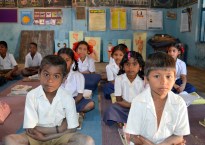
Every step that leads towards an unconventional path is met with impediments and speculations. It is easy to gain support for an established idea but not for an alternative one. A school that debunks the idea of classrooms and has groups where every child is at a different level is not something that would go down well with parents, whose idea of a school is one where the teacher writes on the blackboard and every child in the classroom is at the same level.

‘Hindu’ Terrorism?

By Mosarrap H. Khan
Then Mohanji and Indresh, both said: Yeh bahut achcha hain. Zaroori hain. Sangh se nahi jodna. Sangh nahin karenge. [unclear] Hindutva ke liye bhi aisa koi hain. Sangh ka yeh vichar nahi hain. (This is great. It’s very important that it be done. But don’t link it to the Sangh. The Sangh will not do this. [unclear]. Now Hindutva has someone like this on its side. But this is not the ideology of the Sangh.)

Valentine’s Day: Arranged Love!

By Priyanka Banerjee
Sitting in two different continents with two different time zones, it was a challenge for us to make our love blossom depending entirely on technology. This long distance relationship sometimes appeared funny and sometimes unrealistic for the people around us. There was a big question mark on everyone’s face: how is it possible for two grown-up individuals to love each other in the virtual world?

Valentine’s Day: Celebrating Love

By Indranil Dey
Then about a month later, while having dinner with friends, he got a call. It was about a broken laptop. She called him since her tech-guy was out of town and, somehow, the computer engineers are supposed to know how to repair a laptop, so she thought. It was also a critical time of final submission for her course and she had to prepare a presentation on the damn laptop.

Adharshila Shikshan Kendra: Reconstituting Possibilities for Adivasi Children

By Karishma Desai
Adharshila has thoughtfully embedded local Adivasi political ecological knowledge in curricula and overall school practices. For example, in one curricular inquiry project, students collect folk tales from their own villages and analyze relations between self, community, nature, and world. In another unit, students collect oral histories from village elders to understand why the arid mountain behind their school community was called Reech (bear), considering it did not represent an environment that bears would live in.

Do We Take Teacher Education for Granted in India?

By Mary Ann Chacko
That was years ago. Today my heart is filled with gratitude and the precious memories of teaching in a residential school for boys in Yercaud, Tamil Nadu. But, looking back, I realize that my meltdown was only partially triggered by the thought of dreams remaining unfulfilled. I was raging because I recognized the low-status of school teachers and teacher education colleges in India. Hence I did not want to be associated with the profession or with the degree.

Prof. Amartya Sen, Are the Indians Argumentative Enough?

By Mosarrap H. Khan
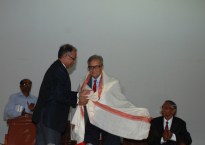
Prof. Sen’s painstaking excavation of a past argumentative tradition in India does justice to our understanding of Indian democratic culture and shows us the relevance of such a tradition in our own times for finding solutions to sectarian politics. What we further require is an understanding of the psyche of the ‘Emotional Indian’ in the general framework of the ‘Argumentative Indian’.

Social Entrepreneurship in the Education Sector

By R. Ganesan
It is to be noted that these social entrepreneurs invest money and use the social entrepreneurial tag for enjoying privileges (social status, tax exemption, and redemption). Most often, these investments are purely motivated by profit-making and driven by greed. These institutions seek donations and frequently hike the fee structure and other incidental charges (boarding and lodging).