On the Question of Interviews for Preschool and Nursery Admissions
By Joyeeta Dey
It has, however, become clear that interviews serve as a smokescreen for concealing the perpetuation of social inequality via schooling.

By Joyeeta Dey
It has, however, become clear that interviews serve as a smokescreen for concealing the perpetuation of social inequality via schooling.

By Mosarrap H. Khan
Our land will not tolerate fascist forces, inhuman policies and barbaric incidents of murdering people on the sectarian or religious grounds. India will not be allowed to turn into a ‘Hindu Afghanistan’.

By Muhammad Ashraf Thachara Padikkal
I mean, I really do believe that there is a God; I do believe that it is appropriate to pray to God and I really do believe that the God has revealed to humanity an ethic that calls on us to live justly with a neighbor.

By Ajit Kumar
I was asked to leave Brown University for not doing any school work. I struggled with alcoholism and bipolar disorder as a young woman, but managed to graduate from Barnard College.
By Joyce Yarrow
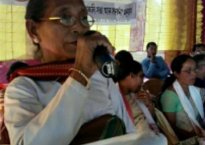
‘Witch-hunting’ in Assam involves branding a woman as a witch or daini, mostly based on the declaration of an Ojha or Bez (quack doctor).This usually happens when villagers approach the village Ojha about someone who has a chronic ailment and the Ojah identifies a woman as the source of the sickness and she is branded as a daini or witch.

By Mosarrap H. Khan
Natasha’s film works on two different registers: first, it reveals to us the extensive labor infrastructure and social life behind the everyday objects that we encounter in the built environment of the city, thereby highlighting our own alienation in modern life; second, it exposes the hazardous working conditions that are masked by the shiny surfaces of our great metropolises.
By Joyce Yarrow
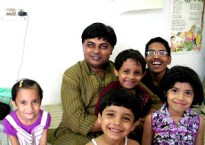
Many of the films made by the Flying Birds documented the lives of working artists or were made during field trips throughout the city or holiday celebrations. When, after the screening, a young man presented me with an embroidered portrait of Tagore, I made no attempt to hide my tears of gratitude. Being with the Flying Birds had changed me in ways I knew I had yet to acknowledge.

By Safia Begum
If I wanted to write at night, I would go to the toilet, stand there, write, and come back. In the toilet, we had a small box for sanitary napkins; I used to hide my pen and papers there. And, again, in the morning I would take it out from there and send my poems to the magazines.
 Cafe Dissensus Everyday